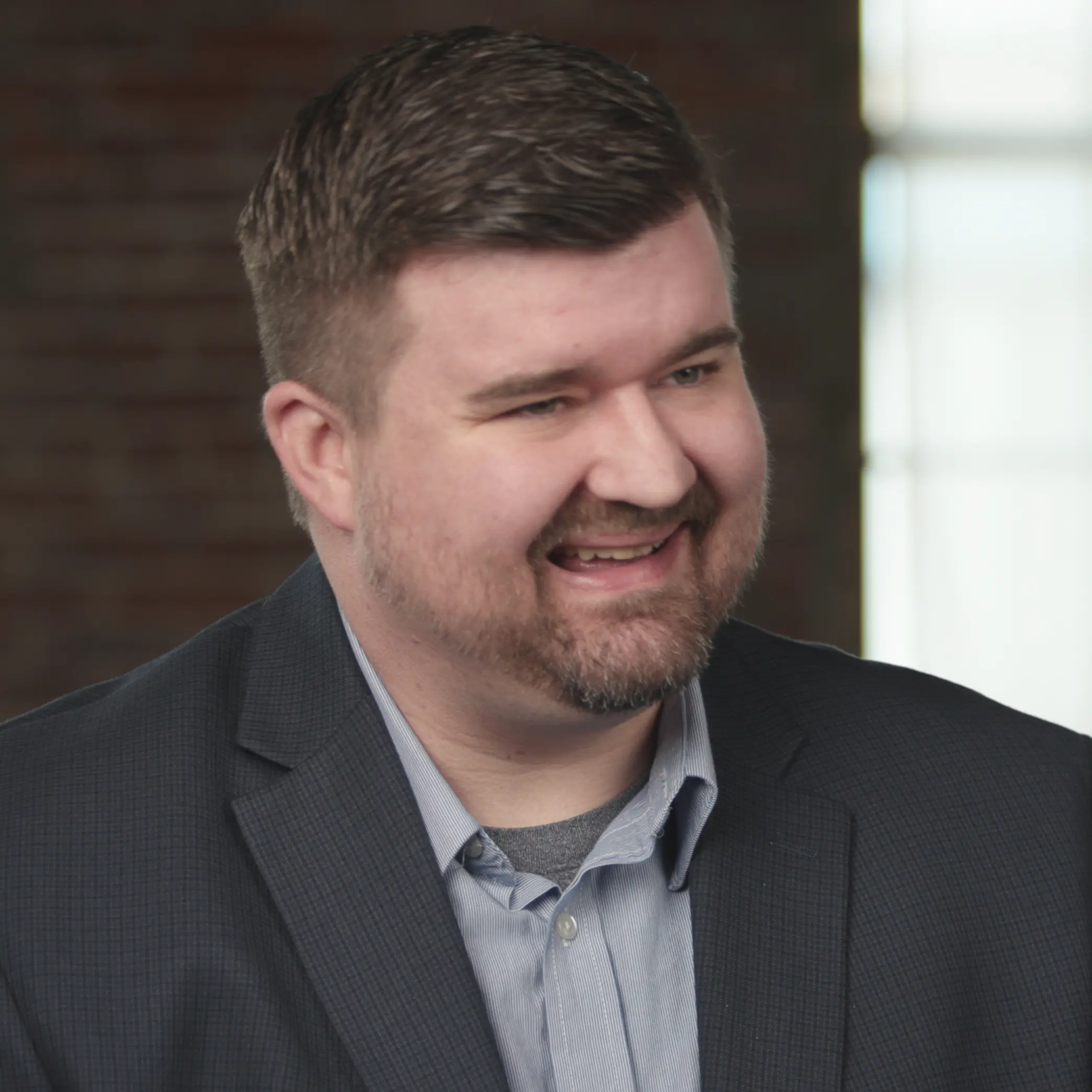
There are few tougher jobs in today's business world than heading up labor realtions for a Detroit automaker. But on March 1, that was the
position that Alphons Iacobelli accepted when he was promoted to vice president
of union relations at DaimlerChrysler.
In his new role, Iacobelli, a 14-year veteran of the company,
will be responsible for labor planning and strategy, employment security and all
economic aspects of the 2007 negotiations with the United Auto
Workers.
And this year’s contract negotiations with the UAW, which
will begin this summer, are expected to be tougher than ever for the Auburn
Hills, Michigan-based automaker. In February, the company announced it was
cutting 13,000 jobs, or 16 percent of its workforce, over the next three years
in an effort to return to profitability.
Meanwhile, DaimlerChrysler CEO Dieter Zetsche is exploring
the idea of selling the DaimlerChrysler and is entertaining offers from a number of
companies—adding even more uncertainty for the future of
employees.
A Detroit native, Iacobelli admits these
challenges are formidable. But he insists that by keeping the dialogue focused
on the big issues affecting the industry while making sure that workers on the
shop floor stay informed, DaimlerChrysler and the UAW will be successful in
reaching solutions.
Iacobelli may have a unique perspective for someone in his
position. His mother, Dora, was a 31-year veteran of Ford Motor Co., where she
was a sewing machine operator and strong UAW advocate. Iacobelli recalls how,
when he was a boy, his mother not only knew all the issues going on at the plant
floor, but she was well aware of the economic challenges facing the industry.
“The average worker on the floor has a keener understanding of what’s going on
in our business than perhaps many give them credit for,” he says.
Iacobelli recently spoke to Workforce Management New York bureau
chief Jessica Marquez about the challenges facing the industry, how labor
relations have changed over the years and what to expect from this year’s
negotiations.
Workforce
Management: How have the challenges facing Detroit’s automakers changed your role as a
manager of labor relations over the years?
Alphons
Iacobelli: Historically this role has been viewed as contract administration
at best. But over the last 10 years there has been a significant shift toward
focusing on the competitive landscape, and rightfully so. The big challenge that
DaimlerChrysler faces concerns competitive positioning relative to the
transplant automakers from other countries. We are dealing with competitive
issues that are much more complex than they were 10 or 15 years ago. This is no
longer a cyclical issue. It’s a fundamental business issue and it requires
having people with business knowledge beyond just understanding a labor
agreement between a union and the company. It requires someone to oversee the
entire management process. For example, in the recent restructuring we have
announced, HR and employee relations were deeply involved. In the past, that
would have been driven largely by the finance department.
WM: How does that
change the kinds of employees you hire in labor relations?
Iacobelli: We
have had to change how we recruit labor relations talent. Today we are looking
for people with comprehensive business knowledge, not just employee relations.
Specifically, that means we are prone to look for candidates with MBAs in
recruiting, rather than just industrial relations majors.
The employees we seek today need to be engaged in crafting
innovative agreements with the union in order to level the playing field with
our competitors. Historically, we could rely more on traditional agreements with
the union and allowing those agreements to legislate how we are going to build
our cars and trucks. But today, we need to address short-term and long-term
solutions to provide job security and be profitable.
WM: How has
DaimlerChrysler been able to establish innovative agreements with its unions
thus far?
Iacobelli: By
working closely with the United Auto Workers and the Canadian Auto Workers, we
have been able to develop team structures in a few plants like our Toledo, Ohio, assembly plant. In a team structure, you
have fewer supervisors on the floor and instead we have instituted team leaders.
If there is a conflict or a problem at the job station, rather than running to a
supervisor, employees can resolve the job themselves.
These people know their jobs better than anyone else. This
structure empowers our workforce and gives employees a greater deal of
ownership. It also has resulted in improving quality and
productivity.
WM: The Global
Engine Manufacturing Alliance plant in Dundee, Michigan, has been lauded by DaimlerChrysler
as the model for the future. [The Dundee plant, which opened in October 2005, was
groundbreaking because the UAW agreed to a three-shift structure, as opposed to
the normal two shifts, the use of contractors working alongside employees, and a
team approach so the plant remains open 21 hours a day, six days a week, 294
days a year.] But the company has yet to implement the model in any other
locations. Why is that?
Iacobelli: When
we first put that agreement together it was clearly a laboratory environment
where we could try different things. Some worked better than others. The
objective is to take what worked well with the partners and develop new
solutions for new businesses. Since GEMA launched, technology has already
changed significantly, so it might require new ways of thinking.
You can’t really take that work practice and apply it
everywhere universally. GEMA was unique to a time and location that made sense
for that particular business model. I am not so much intrigued with taking that
template and running it across every manufacturing facility. I am more
interested in looking at what the future business models would require and
taking a similar approach, then customizing future agreements to the needs of
the business.
WM: Other than
the obvious competitive hurdles DaimlerChrysler is facing now, what is your
biggest challenge?
Iacobelli:
Leadership development is my second-biggest challenge. I am focusing 50 percent
of my energy on a solid group of executives. I am dedicating a good amount of
time talking to entry-level, management and executive-level employees, helping
them to shape their areas of interest. If we can give them some indication of
where there are opportunities within the organization and we can match their
personal and professional aspirations with those opportunities, we get the
benefit.
WM: Given the
current situation at DaimlerChrysler, however, there must be employees looking
to leave the company, if not the entire industry. How do you address
that?
Iacobelli: The
industry challenges are imposing. But I have a high degree of confidence in the
existing leadership and the leadership that we are bringing up through the
system. When an industry is facing so much uncertainty, there is a normal degree
of washout. But usually there are individuals with a long-term interest in
seeing the company succeed. I am one of those individuals and so was my mother,
who worked for 31 years as a sewing machine operator at Ford Motor.
WM: What are you
doing to address employee morale?
Iacobelli: People
want to know where they are in the process. They don’t want a canned right
answer. They also want to have a say. So it is incumbent on us as leaders to
demonstrate transparency to the extent it is possible. The perception of
uncertainty is probably one of the biggest morale busters, so we need to
minimize unwarranted speculation. We have a lot of work to do. We are doing town
halls and using every forum we can to update employees on the
recovery.
The next area of focus for us over the next two months is how
we get that message to the shop floors to make sure they are hearing factual
messages.
WM: While you can
be as transparent as possible and say that you have faith in existing
leadership, the fact of the matter is that tomorrow you might get bought and
everything is different. How can you address that concern?
Iacobelli: I
can’t provide an answer to that. All I can give employees is the best
information that we have available to us now. We know that what we say today is
across the world with a push of the button, and we are focused on providing
truthful communications.
WM: How has the
dialogue with the unions changed in the past 10 years?
Iacobelli: Ten
years ago we would take a more constructionist view of the collective bargaining
agreement and the issues arising from it. So we may spend time on a specific
appeals board case or some issue that came from the plant floor.
Today, there is a massive shift in focus to discuss not just
the agreement, but to discuss the industry challenges and how we can work
together to address them. So over the past two quarters, for example, we have
talked a lot more about health care and how the union and company can work
together to come up with solutions. The tone has changed to be more focused on
how we can work together to improve the competitive landscape. For example, we
are working to affect legislation regarding health care benefits.
WM: Does the
sharp decline in union membership make negotiations easier for
companies?
Iacobelli: No, I
think it presents greater challenges in the long run. With the introduction of
new technology and greater efficiencies that are occurring on every level of
manufacturing, there are fewer people required to accomplish the same tasks.
That means that we have to spend a great deal of energy and time on developing
socially responsible programs to accelerate some retirements. We have worked
closely with the UAW to design these programs with the mutual interest of
protecting the integrity of the business while serving the individual needs of
the employees.
WM: The Big Three
in Detroit will
begin contract negotiations with the UAW this summer. How will this year’s
negotiations be different from past years?
Iacobelli: The
economic environment has changed. The industry challenges with regard to the
transplants continue to gain momentum. Despite the fact that the union and
management have come to a convergence on quality and productivity benchmarks, we
continue to diverge on overall labor costs specifically in regard to health care
and other non-wage components that are escalating the entire total cost
picture.
WM: Retiree
health care is one of the points of contention between the union and Detroit’s Big Three. Do you
believe that retiree health care is a relic of the past?
Iacobelli: My own
personal opinion is that we have to find a solution that addresses the needs of
current and future retirees as well as the needs of the companies. That is a
significant economic challenge that remains to be resolved. That solution not
only is unique to the union and the companies, but it also includes other
forums, like government getting involved with legislation. That is an area where
we are spending a lot of our energy.
WM: Did your
mother receive retiree health care?
Iacobelli: As a
retiree she enjoyed health care. Double-digit inflation since her retirement in
1992 has made it extremely difficult for organizations to continue to support
that without looking for creative solutions.
WM: What advice
would you give other companies that are managing union
relationships?
Iacobelli: The
sharing of information is vital. I would also encourage them to use a
third-party independent source to provide data. You need to engage in an honest
dialogue about the state of the industry and the state of your specific
business.
Click here read the latest details of the Chrysler sale from Workforce Management's sister publication Automotive News.
Tell
us what you think. Discuss this article in the
Workforce Management Community
Center or e-mail your comments to editors@workforce.com.