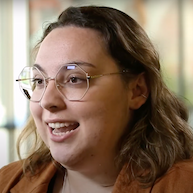
ive years ago, when Rose Stanley’s 81-year-old mother broke her hip while they
were vacationing in San Diego, Stanley did what most people would do: She called
911.
And then she spent the next several days on the phone with
various hospitals and nursing facilities.
Her mother needed major surgery. And after the operation,
she couldn’t travel by plane or car back to her hometown of Chandler, Arizona, for
six weeks. This meant that Stanley had to find a nursing home in San Diego where
her mother could stay while she recovered. She also needed to find someone to help
her mother get around the house when she returned home.
"It was an extremely stressful time," Stanley says.
Stanley reached out to friends and family for help, and asked
her supervisor for time off to deal with the situation. But it never occurred to
her to call her HR manager and find out if her employer, WorldatWork, could provide
assistance.
"I was the typical employee," she says. "At no time did I
think of calling HR."
If Stanley had called HR, she, like many employees elsewhere,
would have learned that her company’s employee assistance program offered information
on elder care services.
As people are living longer, many employees in their mid-
to late 40s are finding themselves in Stanley’s situation. Many have young children,
but they also act as caregivers for their parents.
Despite this trend, only a small number of employers provide
elder care services, experts say. Thirty-nine percent of employers today offer information
about elder care services to employees. That’s an improvement over 1998, when 23
percent made such services available, according to the Families and Work Institute.
Most of the employers offering elder care services do so as
part of their employee assistance programs and don’t do enough to promote them,
says Kathy O’Brien, senior gerontologist with the MetLife Mature Market Institute.
However, this is starting to change. An increasing number
of employers are recognizing the return on investment in these programs, experts
say. Employers such as Baptist Health South Florida, the law firm of Bryan Cave
and WorldatWork are launching or enhancing their programs to help employees identify
and receive care for parents. Elder care assistance can range from simply providing
employees with a referral service to companies contracting out backup care providers
to help employees.
During the first nine months of offering backup care to employees,
Baptist Health has seen $65,000 in savings. The cost savings is a direct result
of not having to replace employees who need to take days off. It doesn’t take into
account productivity losses that have been avoided.
"Part of the reason that I have so much enthusiasm for this
benefit is the fact that it has such a significant hard-dollar ROI," says Lil LeBlanc,
corporate director of work/life effectiveness at Baptist Health South Florida, which
launched a backup care program for its 12,000 employees in July 2007. "Very few
work/life benefits yield this type of tangible savings."
And the business case behind offering elder care programs
seems to be clearer every day, experts say.
Thirty percent of employees expect to have some kind of elder
or adult care responsibilities in the next five years, according to a recent survey
of 10,000 employees conducted by Summa Associates, a Tempe, Arizona-based provider
of backup care and referral services for employers. Twenty-four percent of respondents
say they are affected by co-workers’ elder care responsibilities.
MetLife estimates that productivity lost as a result of employees
taking time to deal with elder care issues amounts to $33 billion annually.
And this is just the beginning, says Carol Sladek, principal
global leader of work/life consulting at Hewitt Associates.
"Most of the employers that we work with are aware that it’s
an issue, but haven’t felt the pain yet," she says.
Not just another work/life benefit
For several years, Baptist Health South Florida has provided employees with support
groups for elder care issues, as well as information on where they could go for
backup care. The health care provider introduced a formal backup care program for
employees in July 2007, in response to employee demand. During the past few years,
employees were increasingly stating in annual work/life surveys that they wanted
more information on elder care services.
Unpredictable absences can be extremely difficult for a health
care provider to manage, LeBlanc says. But picking the right provider was also particularly
challenging, given the fact that Baptist Health’s own employees are experts in providing
care to the sick and disabled.
"Our employees tend to be more attuned to ways of caregiving
and have higher expectations," she says.
As a result, Baptist Health took a year to perform due diligence
on backup care providers, talking to clients, checking references and visiting providers’
sites. In the end, the company chose Superior, Colorado-based Work Options Group.
Under Baptist Health’s program, employees can receive up to
100 hours per year of care for loved ones at $4 an hour.
"That fee covers the cost of one or three dependents," LeBlanc
says. "So it could be for a parent and two kids, for example."
From January through June, employees have used 5,052 hours
of backup care—32 percent of which was specifically for caring for an adult.
One of the main challenges employers encounter in offering
elder care is making sure employees are aware of the program so they can take advantage
of it when they need it, says Stanley, who is the practice leader of professional
development at WorldatWork. It’s not like child care, she says, noting that employees
are often reluctant to make public the fact that they are caring for a parent.
WorldatWork, which has 150 employees, is working to consistently
send out communications about its elder care services. The Scottsdale, Arizona-based
organization has offered elder care information and support through brown-bag lunches
and through its EAP for years.
Two years ago, it contracted with Health Advocate, a Philadelphia-based
company that provides employers with a referral network of backup care services,
says Karen Rozanoff, benefits manager at WorldatWork. Employees or loved ones can
call a number and get assistance on choosing a nursing facility or finding a respite
care provider in their area.
WorldatWork puts communications about the program on its intranet
every other week and holds webcasts to further spread the word. The organization
also hangs posters in break rooms at times when people might be thinking about their
parents, such as Mother’s Day and Father’s Day, Rozanoff says.
Communications also was a challenge at Baptist Health. Its
employees are spread across five hospitals and 10 outpatient centers, LeBlanc says.
The biggest hurdle is that employees don’t know that elder care benefits exist,
she says. They tend to find out about them just as Stanley did—while in the throes
of an elderly parent’s health crisis.
To counteract that problem, LeBlanc made 34 presentations
to employees. "I really felt that the opportunity to hear a personal explanation
about the program really helped," she says.
Baptist Health also did a number of e-mail blasts and had
many discussions with managers so they could discuss the benefit directly with employees,
LeBlanc says.
Communicating the benefits of an elder care program gets easier
with time, she says. "The longer we have the program, the more employee testimonials
we have," she says. Word-of-mouth goes a long way with such a program, she says.
The St. Louis-based law firm of Bryan Cave introduced backup
care services in June and also has found communications to be a challenge, says
Lori Johnson, chief human resources officer.
Bryan Cave has signed up with Bright Horizons Family Solutions,
a Watertown, Massachusetts-based provider of backup care services. Under the program,
the law firm’s 1,882 employees in London and the U.S. have access to 20 days of
backup care per dependent annually. Employees pay $4 an hour for the service.
One challenge with such programs is getting people to sign
up before they need backup care. It’s much easier if they pre-register and avoid
having to do all the paperwork when they find themselves with a sick child or disabled
parent, Johnson says.
"When you don’t pre-register, you are kind of scrambling,"
she says.
Elder care evolution
As the need for elder care support increases, experts say employers are going to
have to think hard about offering flexible work arrangements that complement their
backup care programs.
"Work/life flexibility is an untapped resource for elder care,"
says Carol Sladek, global leader of work/life consulting at Hewitt Associates. "Employers
can provide a lot with offering flexibility without spending a lot of money."
WorldatWork is discussing adding additional paid days off
for employees who need to take care of sick children or parents, Rozanoff says.
To get the full return on investment from elder care programs,
companies need to embrace them as part of their culture, rather than just offer
them as an ancillary benefit, gerontologist O’Brien says. For example, elder care
issues could be a topic for manager training about generational differences in the
workplace, she says.
"This has to be part of the culture so that people are encouraged
to use this benefit," O’Brien says. "Employers can offer this benefit, but unless
managers buy into it, it’s worthless."
Workforce Management Online, September 2008 -- Register Now!