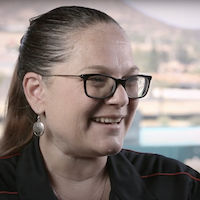
efore modifying any job at Dofasco Inc., Krystyna McLennan seeks the advice
of those who know the job best: employees. Using a structured method pioneered by
Ohio State University, McLennan gathers a handful of top performers in a given job
for a two-day workshop. She prompts them to describe their responsibilities in detail,
along with performance expectations and training requirements.
McLennan avoids leading questions that might influence people’s
responses. Instead, she leaves it entirely up to the roughly half-dozen to a dozen
employees to outline their jobs. The facilitative approach is known as developing
a curriculum, or DACUM, and its common-sense operating principle is that top employees
are in the best position to describe what each of their jobs entails.
Leading the panel through a series of brainstorming exercises,
McLennan facilitates discussion that lets employees itemize every major job duty
they perform, along with the various corresponding tasks required to fulfill them.
They also assess the competencies, behaviors and other attributes people need to
successfully carry out the job.
Each duty and its related tasks are listed on a huge wall
chart, sometimes containing hundreds of items. What emerges is a baseline job profile
from which Dofasco can begin structuring the necessary learning and development.
"Using DACUM, we can get a comprehensive map of the entire
job within two days. Other job-analysis processes took weeks, so the time factor
was really critical for us," says McLennan, a learning and development specialist
for the Hamilton, Ontario-based steel manufacturer, which employs about 7,000 people.
The process isn’t as simplistic as it sounds, though. Once
the initial DACUM chart is created, other Dofasco employees that occupy the same
job get to voice their opinions. Each one receives a copy of the master list and
is asked to verify whether the expert panel has accurately depicted the job.
This second layer of analysis takes several more weeks, but
the additional time is beneficial: Outmoded tasks get pruned away, while emerging
responsibilities are penciled in. Employees keep tweaking the list until, gradually,
an agreed-upon job profile begins taking shape. Throughout the process, employees
are urged to comment on the adequacy of Dofasco’s training and identify skills they
wish to develop further.
Since becoming certified at Ohio State as a DACUM facilitator,
McLennan has engaged employees to assess hundreds of task-oriented jobs at Dofasco.
Rather than an idealized conception of a job, Dofasco’s top brass get a snapshot
of the job functions that employees actually perform.
"Once we had the initial DACUM chart, we could identify which
tasks were highly critical and difficult to learn, [as well as] how frequently they
are performed. That ensures that we build solid training and development programs
around those tasks," McLennan says.
Dofasco isn’t unique in its approach. DACUM is a widely used
competency model that, ironically, isn’t widely publicized. Although it has been
around for decades, the DACUM methodology lacks the promotional cachet of commercially
marketed off-the-shelf tools for job description.
The DACUM philosophy, part art and part science, originated
with a Job Corps Center initiative in Clinton, Iowa, but Ohio State University has
been its driving force since 1984. Run through the university’s Center on Education
and Training for Employment, the program trains HR and training professionals like
McLennan to become certified as DACUM facilitators.
"I don’t think anyone can claim to be its sole owner. DACUM
has become a public-domain process primarily because educational and government
agencies have helped to develop and promote it," says Dr. Robert Norton, who runs
Ohio State’s DACUM program, the only one in the world.
Hundreds of organizations use DACUM strategies to link job
descriptions to skills development, including adherents such as Walt Disney World,
3M, Blue Cross/Blue Shield, Lockheed Martin and Yoplait, according to Norton.
For about $1,400, plus expenses, a company can send training
professionals to Ohio State to complete a weeklong certification course as a DACUM
facilitator. That means the individual has demonstrated applied knowledge of DACUM
processes and is capable of guiding others through the analyses.
Conversely, Ohio State can run the brainstorming workshops
on a company’s behalf, for a fee of $3,600, excluding employees’ travel expenses.
The acronym itself is a bit misleading, since "curriculum
design" doesn’t truly capture what DACUM is about, Norton says. At its heart, the
heavily analytical process aims to take the pain out of defining jobs by precisely
conveying job tasks and outlining what is expected of employees.
After identifying key duties, employees are asked to place
them in the most logical sequence. For example, if an employee embarks on a project,
the individual tasks might include planning, implementation, analysis and follow
up.
Typically, the painstaking analysis yields six to 12 major
job duties and about 75 to 125 separate tasks, Norton says. Each task subsequently
gets ranked according to the tools, equipment, knowledge, skills or behaviors that
employees need to execute it.
Dofasco started using the approach during a major downsizing in the 1990s.
Scores of veteran employees accepted early retirement, which in the short term
helped the company's cost structure. Yet losing that brainpower all at once
posed a gigantic problem for Dofasco, which has since become part of
international steel conglomerate ArcelorMittal, based in Luxembourg.
“The [existing] job descriptions and job profiles just didn’t cover it,”
McLennan says.
Other organizations use the DACUM method for analyzing occupations
or "job clusters," or for describing the duties of jobs that don’t yet exist. Patt
Bray has been a DACUM practitioner since 1997, instituting the methodology at several
organizations where she has worked. Most recently, Bray introduced the concept at
Principal Financial Group, where she spearheads training for Benefits Edge, a new
department that designs online benefits-administration systems for carriers of Principal’s
products.
Because these jobs are new to Principal, Bray is using a conceptual
model to describe job functions and talent requirements.
"To get people on the same page, we did a DACUM analysis first
at the functional level. Now we’re starting to analyze each particular role within
that function," and prioritizing learning needs accordingly, Bray says.
DACUM probably will seep into other departments within the
Des Moines, Iowa-based firm, Bray says, since she has been invited to discuss its
potential uses with company directors.
The idea of querying employees about their jobs isn’t novel.
Several other methods of job analysis rely on surveys, checklists, interviews with
supervisors or similar qualitative measures. But speed and precision differentiate
DACUM from other methods, according to proponents.
"It’s not the only tool that I use, but it’s the one I probably
use the most because of the quick turnaround [when using] the DACUM chart," Bray
says.
Jim Manson, a technical training supervisor with paper manufacturer
Glatfelter Inc. in Chillicothe, Ohio, is redesigning nearly 20 different maintenance
and production jobs using DACUM procedures. Some of those positions require employees
to demonstrate proficiency in the use of large mechanical equipment.
"The biggest advantage we’ve seen is getting new operators
up to speed faster," Manson says.
Glatfelter is exploiting the DACUM methodology to spruce up
antiquated apprentice programs, Manson says. The emphasis is less on required hours
of learning and more on the practical skills employees need to develop.
To help them stay abreast of changing skills requirements,
Manson uses the information to design self-help "pocket guides" for use by employees
and their supervisors.
"That enables us to do more practical tracking of what employees
are learning on the job. We then tie [those findings] into training courses to make
sure the curriculum covers what’s needed and objectives are being met," Manson says.
Having employees who fully understand their duties may seem
axiomatic, but a recent report suggests many companies are struggling. In a study
of senior HR and other executives in June, research company IDC and assessment provider
Cognisco said companies in the U.S. and Great Britain are squandering tens of millions
of dollars because of "employee misunderstanding" of policies, procedures and job
functions.