Minimum Wage by Province - Canada (2026)
Summary
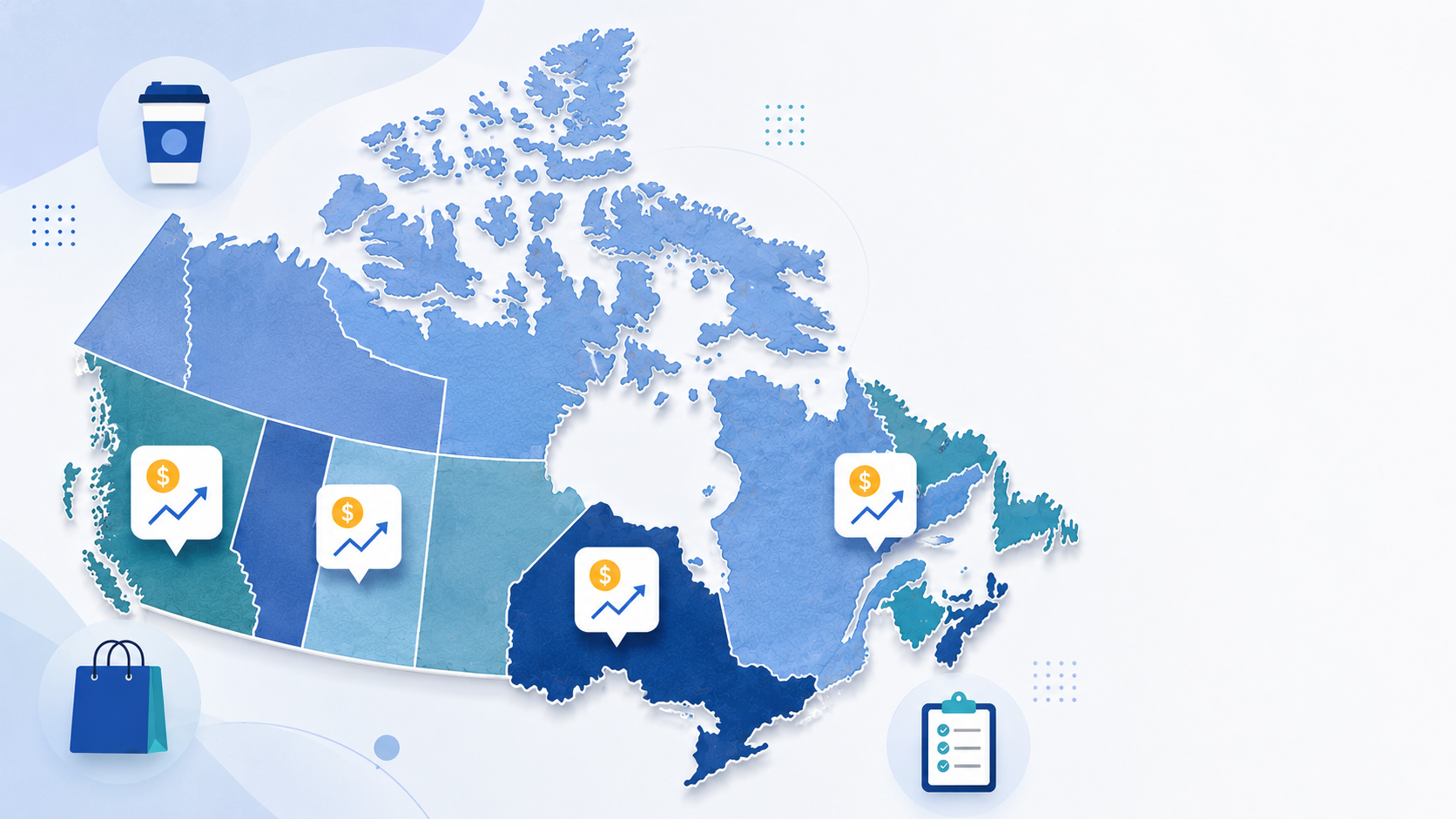
Minimum wage in Canada ranges from $15.00 per hour in Alberta to $19.75 per hour in Nunavut as of 2026, with most provinces scheduling annual increases tied to inflation. Every province sets its own general minimum wage, plus separate rates for liquor servers, students, and homeworkers in some jurisdictions. Federally regulated employers follow the Canada Labour Code rate of $18.15 per hour effective April 1, 2026. Operators running locations across multiple provinces must track each jurisdiction separately and update payroll on the exact effective date.
- Nunavut has the highest minimum wage at $19.75 per hour, while Alberta has the lowest at $15.00 per hour
- Nova Scotia has two scheduled increases in 2026: $16.75 effective April 1 and $17.00 effective October 1
- Federally regulated industries (banking, telecom, interprovincial transport) follow a separate federal minimum wage of $18.15 per hour effective April 1, 2026
If you operate a restaurant, retail chain, care home, or franchise with locations in more than one Canadian province, minimum wage compliance is the single most common source of payroll errors and back-pay claims. Each province and territory sets its own rate, schedules its own increases, and applies its own rules to liquor servers, students, and homeworkers. Missing an effective date by even a single pay period can trigger employment standards complaints, retroactive payments, and administrative penalties. This article covers every general minimum wage rate across Canada for 2026, every scheduled increase with its effective date, special category rates, federal jurisdiction rules, and a worked example showing how to calculate back pay when a rate change is missed.
Minimum wage by province — Canada (2026) at a glance
The table below shows the general adult minimum wage in every Canadian jurisdiction as of 2026, along with scheduled increases. Rates are listed in Canadian dollars per hour.
| Province / Territory | Current Rate | Next Scheduled Increase | Governing Legislation |
|---|---|---|---|
| Alberta | $15.00 (effective October 1, 2018) | None announced | Employment Standards Code |
| British Columbia | $17.85 (effective June 1, 2025) | $18.25 (effective June 1, 2026) | Employment Standards Act |
| Manitoba | $16.00 (effective October 1, 2025) | $16.40 (effective October 1, 2026) | Employment Standards Code |
| New Brunswick | $15.90 (effective April 1, 2026) | April 1, 2027 (tied to NB CPI) | Employment Standards Act |
| Newfoundland and Labrador | $16.35 (effective April 1, 2026) | April 1, 2027 (tied to national CPI) | Labour Standards Act |
| Northwest Territories | $16.95 (effective September 1, 2025) | September 1, 2026 (tied to NWT CPI and average hourly wage) | Employment Standards Act |
| Nova Scotia | $16.75 (effective April 1, 2026) | $17.00 (effective October 1, 2026) | Labour Standards Code |
| Nunavut | $19.75 per hour | September 1, 2026 (tied to Iqaluit CPI and average hourly wage) | Labour Standards Act |
| Ontario | $17.60 (effective October 1, 2025) | $17.95 (effective October 1, 2026) | Employment Standards Act, 2000 |
| Prince Edward Island | $17.00 (effective April 1, 2026) | $17.30 (effective October 1, 2026) | Employment Standards Act |
| Quebec | $16.60 (effective May 1, 2026) | May 1, 2027 (annual review) | Act Respecting Labour Standards |
| Saskatchewan | $15.35 (effective October 1, 2025) | October 1, 2026 (tied to SK CPI and average hourly wage) | Employment Standards Act |
| Yukon | $18.51 (effective April 1, 2026) | April 1, 2027 (tied to Whitehorse CPI) | Employment Standards Act |
| Federally regulated | $18.15 (effective April 1, 2026) | April 1, 2027 (tied to national CPI) | Canada Labour Code |
Minimum wage in Alberta (2026)
Alberta's general minimum wage is $15.00 per hour and has remained unchanged since October 1, 2018, making it the lowest in Canada. Alberta does not index its minimum wage to inflation and has no scheduled increase announced for 2026. The rate is set under the Employment Standards Code.
Alberta has a separate student minimum wage of $13.00 per hour for employees under 18 working 28 hours or less per week during the school year, or any hours during school breaks. A Tim Hortons franchise in Calgary employing a 17-year-old after school can pay $13.00 per hour for the first 28 weekly hours, then must pay $15.00 per hour for any additional hours in that same week.
Minimum wage in British Columbia (2026)
British Columbia's general minimum wage is $17.85 per hour, effective June 1, 2025, with the next increase to $18.25 per hour scheduled for June 1, 2026 based on the BC Consumer Price Index. BC eliminated its separate liquor server minimum wage in 2021, so servers in licensed restaurants now earn the same rate as other employees. The rate is set under the Employment Standards Act.
A Vancouver restaurant paying tipped servers must pay the full $17.85 per hour regardless of tip income, rising to $18.25 per hour on June 1, 2026. Resident caretakers, live-in home support workers, and live-in camp leaders have separate daily or monthly minimum rates rather than hourly.
Minimum wage in Manitoba (2026)
Manitoba's general minimum wage is $16.00 per hour, effective October 1, 2025, with the next increase to $16.40 per hour scheduled for October 1, 2026 indexed to Manitoba's Consumer Price Index. Manitoba's rate is set under the Employment Standards Code and applies to most employees, with limited exceptions for certain agricultural and family-business workers.
A Winnipeg retail chain scheduling a part-time cashier for 20 hours per week must pay at least $320.00 in gross weekly wages before any deductions. Manitoba does not have a separate student or training wage.
Minimum wage in New Brunswick (2026)
New Brunswick's general minimum wage is $15.90 per hour, effective April 1, 2026, with the next increase scheduled for April 1, 2027 indexed to the New Brunswick Consumer Price Index. The province is on an annual indexation schedule established under the Employment Standards Act.
A Moncton care home paying a personal support worker the minimum wage for a 40-hour week owes $636.00 in gross weekly wages. New Brunswick does not have a separate student wage but does set a different rate for counsellors at residential summer camps.
Minimum wage in Newfoundland and Labrador (2026)
Newfoundland and Labrador's general minimum wage is $16.35 per hour, effective April 1, 2026, with the next scheduled increase on April 1, 2027 indexed to the national Consumer Price Index. The rate is set under the Labour Standards Act.
A St. John's quick-service restaurant operator must pay every employee, regardless of tip income or role, at least $16.35 per hour. The province does not have a separate liquor server or student rate.
Minimum wage in Northwest Territories (2026)
The Northwest Territories minimum wage is $16.95 per hour, effective September 1, 2025, with the next review scheduled for September 1, 2026. The territory indexes its rate to the NWT Consumer Price Index and average hourly wage, with annual adjustments on September 1. The rate is set under the Employment Standards Act.
A Yellowknife retail operator must pay $16.95 per hour for all hours worked, including any overtime base rate calculations. There are no separate student or server minimums.
Minimum wage in Nova Scotia (2026)
Nova Scotia's minimum wage increases twice in 2026: to $16.75 per hour effective April 1, 2026, then to $17.00 per hour effective October 1, 2026. Nova Scotia is one of only two Canadian jurisdictions with two scheduled increases in a single year. The rate is set under the Labour Standards Code.
A Halifax restaurant must update payroll on both April 1 and October 1, 2026 to remain compliant. Missing the October 1 increase by even one pay period can trigger back-pay obligations for every hour worked between October 1 and the correction date. Nova Scotia has separate provisions for inexperienced employees with less than three months of experience but applies the general rate to most workers.
Minimum wage in Nunavut (2026)
Nunavut has the highest minimum wage in Canada at $19.75 per hour. The territory introduced a new annual adjustment formula in 2025, indexed to the Iqaluit Consumer Price Index and average hourly wages, with adjustments effective every September 1. The rate is set under the Labour Standards Act.
A retail operator in Iqaluit must budget for the highest base wage in the country. Combined with northern living allowances and limited labour supply, payroll costs in Nunavut typically run significantly higher than in southern provinces.
Minimum wage in Ontario (2026)
Ontario's general minimum wage is $17.60 per hour, effective October 1, 2025, with the next increase to $17.95 per hour scheduled for October 1, 2026 indexed to the Ontario Consumer Price Index. Ontario also maintains separate minimum wages for students under 18 ($16.60 per hour, rising to $16.90 per hour on October 1, 2026), homeworkers ($19.35 per hour, rising to $19.70 per hour on October 1, 2026), and hunting, fishing and wilderness guides (flat daily rates). The rate is set under the Employment Standards Act, 2000.
A Toronto restaurant employing a 17-year-old student for fewer than 28 hours per week during the school year can pay the student rate of $16.60 per hour. Once that student turns 18 or exceeds 28 hours in a school week, the full $17.60 rate applies for every hour in that pay period.
Minimum wage in Prince Edward Island (2026)
PEI's general minimum wage is $17.00 per hour, effective April 1, 2026, with the next increase to $17.30 per hour scheduled for October 1, 2026 and a further increase to $17.60 per hour scheduled for April 1, 2027. PEI maintains a twice-yearly adjustment pattern based on Employment Standards Board recommendations. The rate is set under the Employment Standards Act.
A Charlottetown café operator must update payroll on April 1, 2026 to reflect the $17.00 rate, then again on October 1, 2026 to reflect the $17.30 rate. There is no separate student or server rate in PEI.
Minimum wage in Quebec (2026)
Quebec's general minimum wage is $16.60 per hour, effective May 1, 2026, with the next increase scheduled for May 1, 2027. Quebec maintains a separate minimum wage for tipped employees of $13.30 per hour, effective May 1, 2026, making it the only province in Canada with a tipped employee rate (Ontario eliminated its server rate in 2022; BC eliminated theirs in 2021). The rate is set under the Act Respecting Labour Standards.
A Montreal restaurant employing tipped servers can pay $13.30 per hour as long as declared tips bring total compensation above $16.60 per hour. Employers remain responsible for topping up wages if tips fall short in any pay period.
Minimum wage in Saskatchewan (2026)
Saskatchewan's general minimum wage is $15.35 per hour, effective October 1, 2025. Saskatchewan reviews its rate annually based on a formula combining the provincial Consumer Price Index and average hourly wage, with the next adjustment expected October 1, 2026. The rate is set under the Employment Standards Act.
A Regina retail operator must pay $15.35 per hour and watch for the October 2026 announcement, which typically comes in late spring or early summer. Saskatchewan does not have a separate student or server wage.
Minimum wage in Yukon (2026)
Yukon's general minimum wage is $18.51 per hour, effective April 1, 2026, with the next increase scheduled for April 1, 2027 indexed to the Whitehorse Consumer Price Index. The rate is set under the Employment Standards Act.
A Whitehorse care home or restaurant operator must update payroll every April 1 when the Yukon government publishes the new rate. Yukon does not have separate student or server minimums.
Federally regulated minimum wage in Canada (2026)
The federal minimum wage is $18.15 per hour, effective April 1, 2026, and applies to employees in federally regulated industries: banks, interprovincial and international transport (airlines, rail, trucking across provincial borders), telecommunications, broadcasting, postal services, grain elevators, and federal Crown corporations. The rate is set under the Canada Labour Code.
The federal rate automatically applies whenever the provincial minimum wage where the employee works is lower than $18.15 per hour. If the provincial rate is higher (for example, Yukon at $18.51 effective April 1, 2026), the higher provincial rate applies. A national trucking company operating in Saskatchewan must pay the federal rate of $18.15 per hour, not the Saskatchewan rate of $15.35 per hour, because trucking is federally regulated.
Worked example: calculating back pay for a missed minimum wage increase
Assume a Halifax restaurant operator missed the October 1, 2026 Nova Scotia increase from $16.75 to $17.00 per hour. A part-time server worked 32 hours per week for 6 weeks before the error was caught.
- Difference in hourly rate: $17.00 minus $16.75 equals $0.25 per hour
- Total hours worked at incorrect rate: 32 hours per week multiplied by 6 weeks equals 192 hours
- Back pay owed: 192 hours multiplied by $0.25 equals $48.00 per employee
- For a restaurant with 12 affected employees: $48.00 multiplied by 12 equals $576.00 in retroactive wages
- Plus any vacation pay accrual (4% in Nova Scotia for under 8 years of service): $576.00 multiplied by 0.04 equals $23.04
- Total back-pay liability: $576.00 plus $23.04 equals $599.04
This figure does not include potential administrative penalties from Labour Standards Nova Scotia or interest on unpaid wages. The cost compounds quickly across multiple locations and longer detection windows.
Special category minimum wages across Canada (2026)
Several provinces maintain separate minimum wage rates for specific worker categories beyond the general adult rate. Operators must identify which category each employee falls into and apply the correct rate.
Liquor servers: Quebec is the only province with a separate tipped employee rate at $13.30 per hour, effective May 1, 2026. Ontario, BC, Alberta, and all other provinces apply the general minimum wage to servers regardless of tips.
Students under 18: Alberta ($13.00 per hour) and Ontario ($16.60 per hour, rising to $16.90 per hour on October 1, 2026) maintain separate student rates with specific hour-based eligibility rules. The Ontario student rate applies only when the student works 28 hours or less per week during the school year, or any hours during school breaks.
Homeworkers: Ontario sets a separate homeworker rate of $19.35 per hour, rising to $19.70 per hour effective October 1, 2026, for employees who perform work in their own homes for an employer.
Hunting, fishing, and wilderness guides: Ontario sets flat daily rates rather than hourly for guides, varying by trip length.
How Workforce.com handles multi-province minimum wage compliance
Operators running locations across multiple provinces face a recurring problem: payroll rates change on different dates in different jurisdictions, and missing a single effective date triggers retroactive payments across every affected employee. Workforce.com's payroll software automatically applies the correct provincial minimum wage to every shift based on the location where it is worked, and updates rates on the exact effective date set by each provincial employment standards authority. The platform handles Nova Scotia's twice-yearly increases, Ontario's student rate hour thresholds, Quebec's tipped employee top-up calculations, and federal jurisdiction overrides without manual intervention. For shift-based operators, scheduling software and time and attendance integrate with payroll to ensure every minute worked is paid at the correct rate for the correct jurisdiction. Book a demo to see how multi-province payroll automation works for your business.
What is the minimum wage in Canada in 2026?
Which province has the highest minimum wage in Canada in 2026?
Which province has the lowest minimum wage in Canada in 2026?
When does the minimum wage increase in Nova Scotia in 2026?
What is the federal minimum wage in Canada in 2026?
Do tipped employees in Canada have a lower minimum wage?
Does Ontario still have a separate student minimum wage in 2026?
How often does minimum wage change in Canada?
What happens if an employer pays below the minimum wage in Canada?
Are salaried employees covered by minimum wage laws in Canada?
This information is for general purposes only and should not be considered legal advice. While we strive to keep it updated, laws and regulations can change at any time. It’s always a good idea to consult with a legal professional or relevant authorities to compliance with the most current standards.
Schedule, engage, and pay your staff in one system with Workforce.com.
Join over 52,000 of your HR peers
Enter your email below to subscribe to our newsletter.


You might also like

Ontario Statutory Holidays: Complete Employer Guide (2026)
A practical guide to Ontario's 9 statutory holidays for 2026, with confirmed dates, public holiday pay and premium pay rules, and worked examples for shift-based employers.
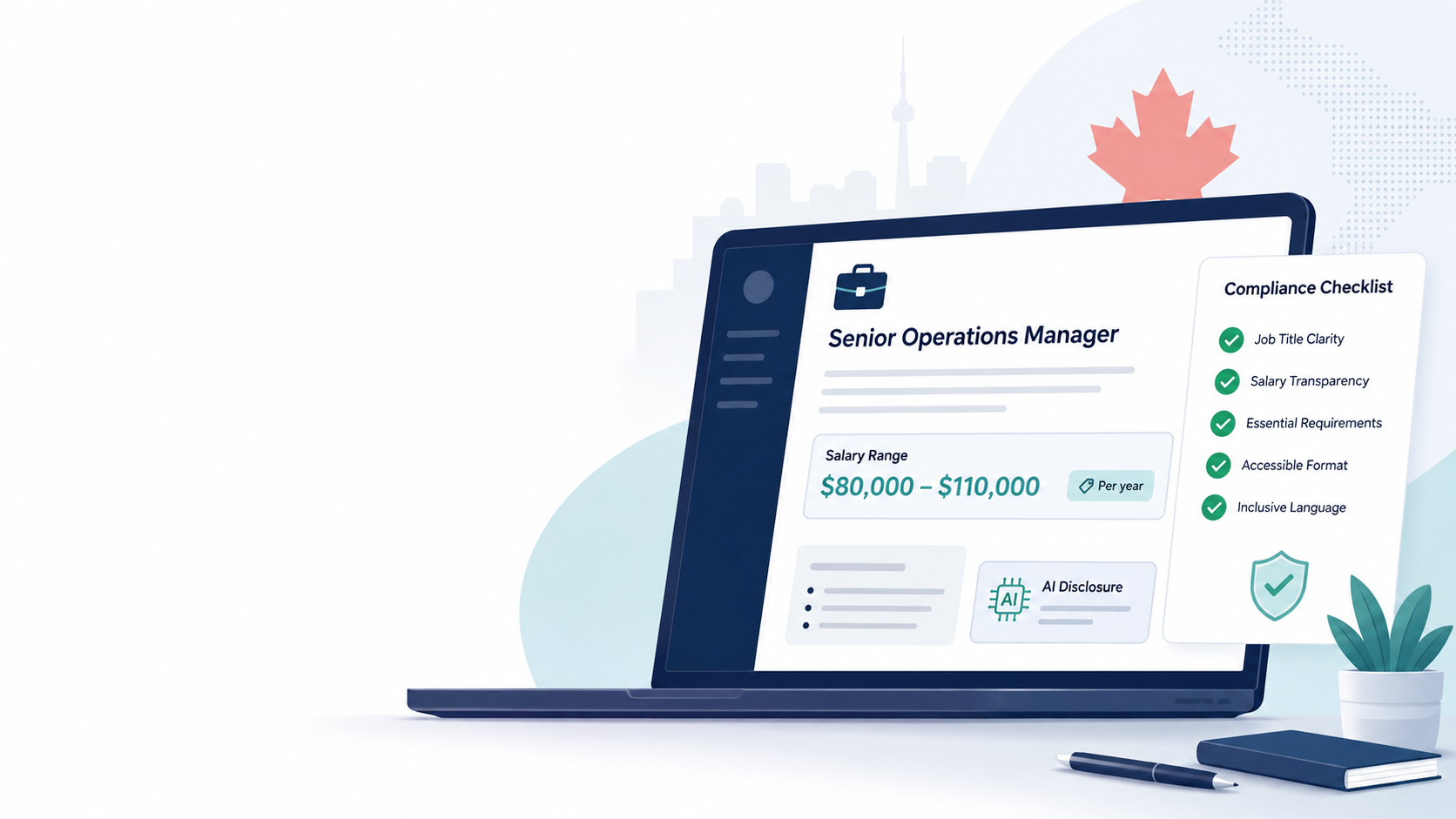
Ontario Job Posting Rules (2026): What You Can and Cannot Say
Everything Ontario employers with 25 or more staff must include in publicly advertised job postings since January 1, 2026, covering salary ranges, AI disclosure, the Canadian experience ban, and more.

BC Statutory Holidays - Canada (2026)
A complete guide to British Columbia's 11 statutory holidays in 2026, including dates, eligibility rules, average day's pay calculations, and premium rates for employees who work.
Consolidate systems with Workforce.com
Get rid of multiple systems and manage HR, scheduling, and payroll in one place.